1800 233 2309


 <
<Solar panels are now a familiar sight across India — on rooftops, factories, schools, and commercial buildings. They are reliable and usually low-maintenance, but they are not completely “set and forget.” Over time, factors such as weather, dust, wiring, or equipment wear can quietly reduce performance. The good news is that most issues show early signs if you know what to look for.
One of the most common concerns is when a solar system suddenly produces less electricity than before. Often, there is no obvious physical damage, which makes it confusing. This drop usually occurs due to shading (such as a growing tree or a nearby structure), seasonal dust accumulation, or the natural ageing of panels. The easiest way to spot this is to check your inverter or monitoring app and compare today’s output with the same time period from previous weeks. If the drop is consistent, it’s a sign that something is blocking or reducing sunlight absorption.
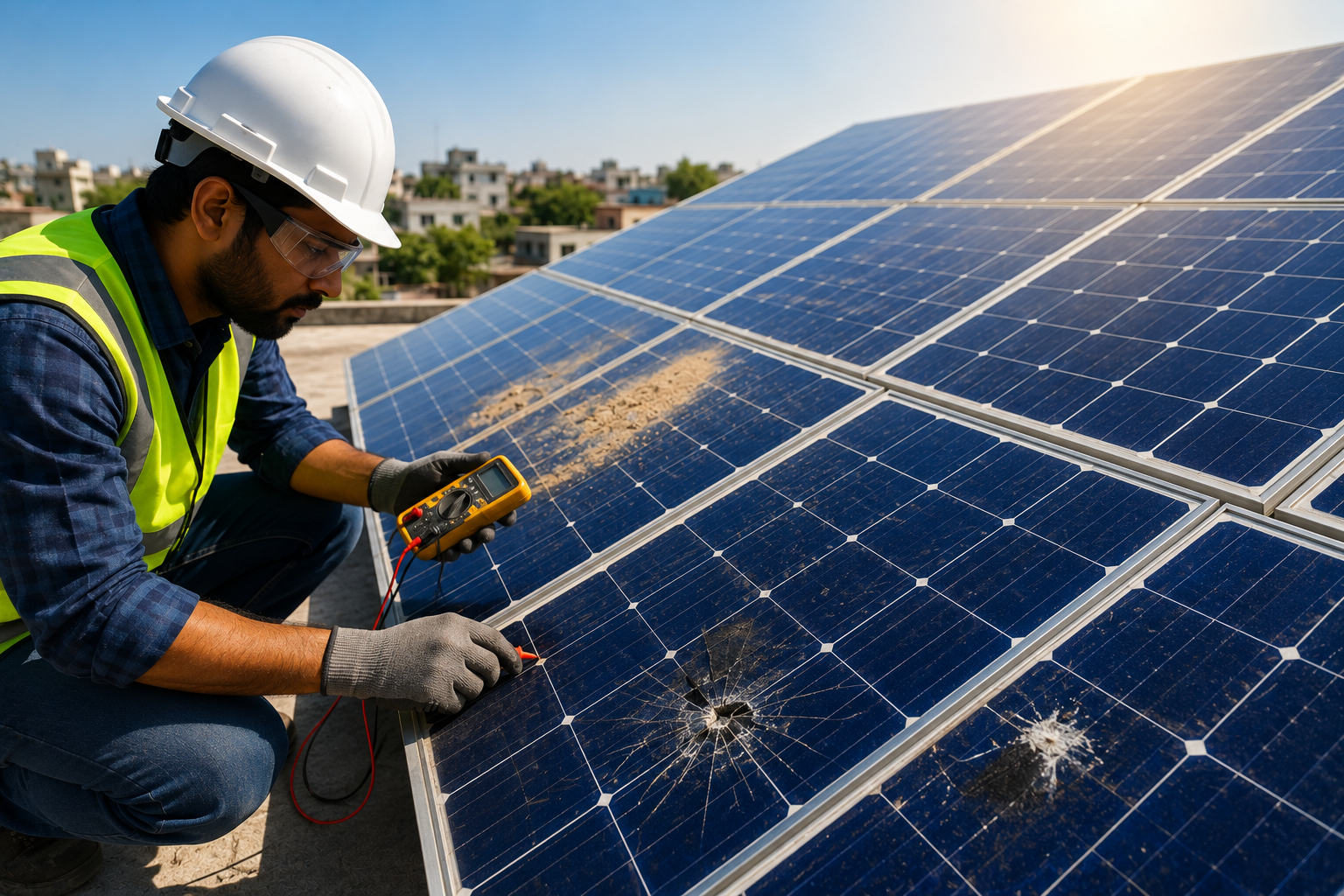
In many parts of India, dust is unavoidable. Whether it’s dry weather, construction activity, or pollution, a thin layer of dirt can settle on panels surprisingly quickly. This layer blocks sunlight and slowly reduces efficiency without any visible warning. You can usually identify it just by looking at the surface; if it looks dull rather than clean and reflective, it needs cleaning. A simple wash with water (early morning or evening) or periodic professional cleaning can quickly restore performance.
The inverter plays a central role because it converts solar energy into usable electricity. If it has a problem, the entire system is affected. Signs include error messages on the display, unusual blinking lights, or no output at all even when sunlight is strong. Sometimes the issue is minor and can be fixed with a restart or reset. But if the problem keeps coming back, it may point to internal faults that need a technician’s inspection.
Solar systems depend on proper electrical connections. Over time, wires can loosen due to heat, wind, or poor installation practices. When this happens, you may notice irregular power output, sometimes normal, sometimes suddenly low. These issues are not always visible from outside, which makes them tricky. A trained technician usually checks junction boxes, connectors, and cables to ensure everything is tightly secured and functioning safely. Fixing loose or damaged wiring often restores normal performance.
Solar panels are durable, but they are still exposed to weather conditions like heavy heat, wind, and sometimes hail. Small cracks inside the solar cells, known as micro-cracks, can develop over time. These are not easy to see with the naked eye, but they slowly reduce efficiency. In some cases, the damage is caused during installation or transportation. Advanced tools like thermal imaging are used to detect them. If the damage is serious, replacing the affected panel is usually the best solution.
Solar panels in India work very efficiently, but like any system, they need a little attention now and then. Most issues begin quietly like reduced output, slight dirt buildup, or minor connection faults but they can be easily managed if identified early. Regular monitoring, timely cleaning, and occasional technical checks can ensure your solar system continues to perform smoothly for many years. Switch to clean, cost-efficient power with end-to-end solar solutions from Zodiac Energy!
© Zodiac Energy Limited 2026 All rights reserved.